Published
2015-10-30The book is written by thirteen authors, all with experience of ceramics and porcelain in various forms, as archaeologists, in museums or as ceramists and cultural writers and are all experts in their fields. The book project has emerged during several years of seminar work under the leadership of the main editor, former museum director Dr. Bengt Nyström.
Ceramics, as we know, are all objects made of fired clay, and ceramic objects have been an important part of our culture for millennia. The art of firing clay into pottery was discovered at an early stage, long before nomadic cultures gave way to the first agricultural societies. Clay of different compositions has been used for everything from crucibles, clay tiles and brick making to toilet seats and sinks, electric plugs and dentures. More commonly, however, it refers to various types of household and storage vessels and fine ceramics, including earthenware, faience, flint, stoneware and porcelain, as well as tile kilns.
Pottery comes from the Greek word kerameikos, potter's art; keramos means potter's clay. This ancient Greek word was probably borrowed from Asia Minor, where objects made of fired clay were used by the first agricultural cultures of Mesopotamia at the latest around 9000-10,000 BC. In Scandinavia, ceramic craftsmanship was widespread by around 5000 BC.
Stone and wooden utensils and objects were gradually replaced by more functional and practical fired clay solutions for household cooking and storage needs. In our geographical area, this development started around 7000 years ago in what is known as the Ertebölle and Trattbärgar cultures, named after the distinctive fired clay vessels. Pottery-making techniques and vessel shapes were adopted from continental farmers. The pottery has since had a long and richly varied design over the millennia, a folk tradition that in many ways still lives on today in Swedish pottery. Basic needs and basic functions are recognized over time in the design of the vessels from funnel beakers to late Höganä vessels and turned bowls and bowls. Even today, one can sense the same delight in being able to shape the plastic clay among today's schoolchildren and participants in the many pottery courses.
Ceramics & Porcelain in Sweden through 7000 years is a popular scientific account of the history of ceramics in our country and is aimed at both the general public and university students. It has a cultural-historical and transnational ambition where all types of objects, production, technology, use etc. during different periods are presented. It deals with ceramics in various forms in what is today Sweden but also in areas that were previously part of the Swedish Empire, i.e. Finland and Stralsund.
This is the first time an overview of this kind has been compiled. Research on Swedish ceramics has varied from different starting points and research areas. This has characterized the way the subject has been approached. The finds and sherds of the oldest pottery have been the concern of archaeologists. Faience, flintware, porcelain and modern stoneware have been studied by art historians, while pottery and its production environment by ethnologists. The ambition here, however, has been to adopt a more comprehensive perspective and provide a summary of technical and aesthetic developments.
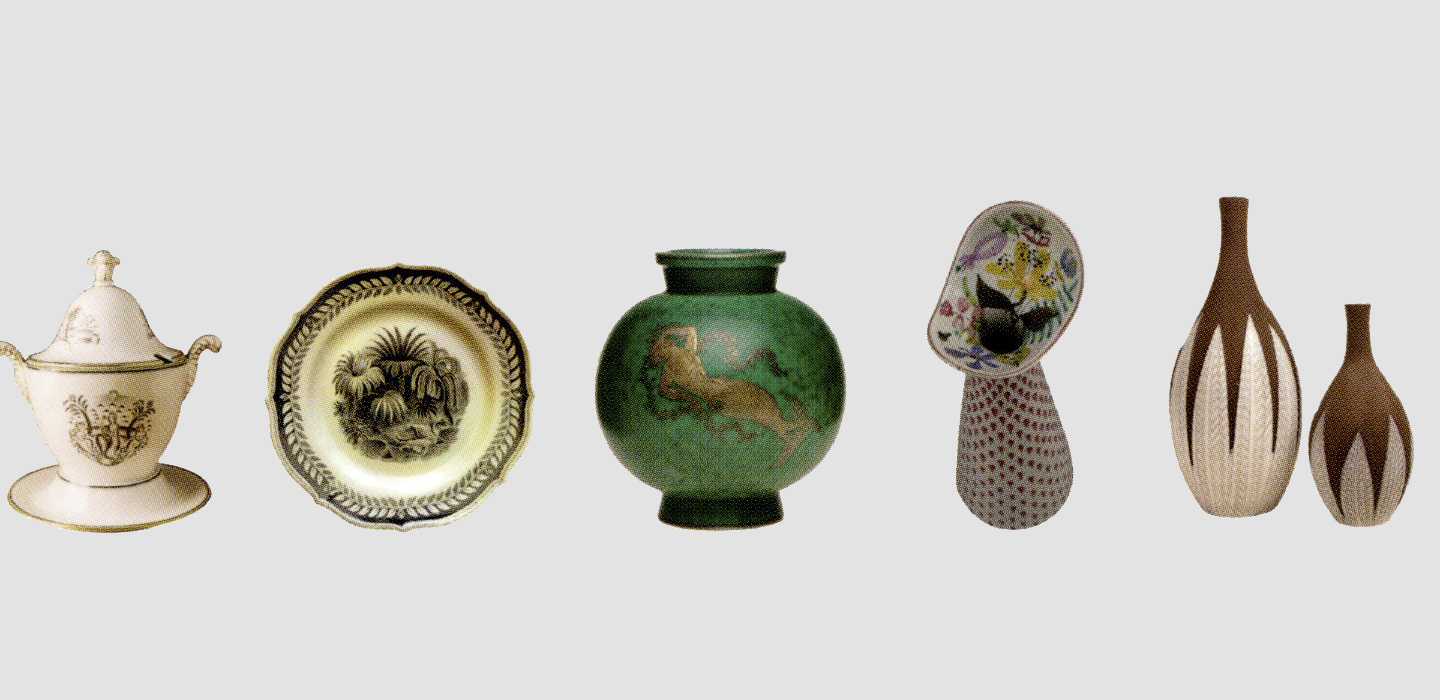
The ceramics are depicted in different stages divided into common periods that are linked to both technical and social changes and fashions but also according to some themes, e.g. German stoneware during the Middle Ages, Dutch earthenware during the 17th century, Wedgwood and other English influences from the end of the 18th century. Also new is Chinese porcelain, which was often made to order according to drawings from Sweden (e.g. coat of arms and monogram porcelain) and how Chinese designs have influenced Swedish ceramics (e.g. patterns and shapes, stoneware) to this day. Sections on tiles and kilns, technical porcelain, manufacturing techniques, etc. during different periods have also been included. The description of ceramics from the later centuries, i.e. from the 18th century to the present day, is broader and covers both production in the country's factories and potteries and individual independent potters.
In ancient times, many household items were made of pottery. Archaeological finds from prehistoric and medieval times show this. Pictures from the 18th and early 19th centuries show three-legged pots, storage vessels, mugs, bowls of various kinds, plates and utensils made of ceramic. With the rise of industrialism, these were increasingly manufactured in factories in better qualities and at low prices. As cooking became more complicated, the kitchen's demand for precision grew, which accelerated the development of new utensils. Clay and ceramics have gradually been replaced by other materials for many tasks - yet ceramic production lives on. A concluding chapter discusses the other materials that have replaced and are replacing ceramics in our time - glass, copper, aluminum, enamel, plastic and stainless steel. This leads to questions about the use of ceramics today, about ceramic art and replacement materials for ceramics. Studio ceramics, i.e. modern utility and art ceramics alongside factory production and ceramic design, are described in two sections.
A special factual chapter presents short factory histories with employed artists with signatures.
Bengt Nyström
Editor