Published
2021-04-25Updated
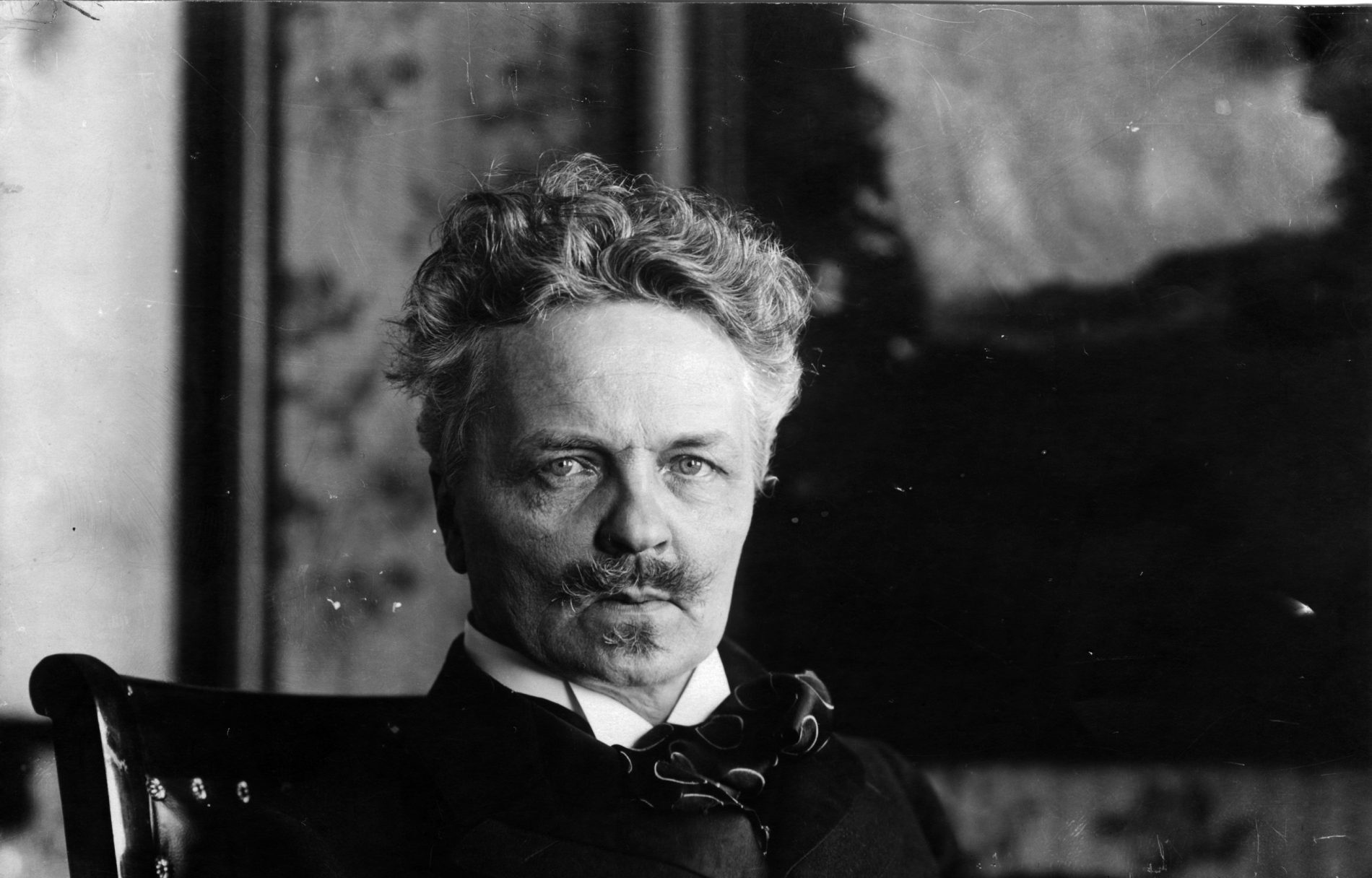
2022-01-18The National Edition of Strindberg’s Collected Works, which has been overseen by Stockholm University for 35 years, has now been completed and is also available in its entirety in digital form on Litteraturbanken. The Torsten Söderberg Foundation has recently been one of the project’s main financial backers.
The National Edition reproduces Strindberg's texts "as he himself wished to be read" by drawing on his own surviving manuscripts, which thus constitute the basic texts of the edition. In addition to Strindberg's texts, each volume contains extensive commentaries, which have often required extensive new research. They describe the history of their creation and how the works were received by contemporaries, both in Sweden and Europe. In addition, special text-critical commentaries are added to each volume. These account for manuscripts, editions and translations; and also include several Strindberg texts not printed in the text volumes.
Because the edition is based on Strindberg's manuscript, censorship, misreadings and normalizations have been identified and eliminated. In this way, many readings are new, as in The Servant's Son, Miss Julie and The Dance of Death . The works and articles that Strindberg wrote directly in French are reproduced without corrections in the printed volumes together with translations into Swedish: A Fool's Defense, Vivisections II, Inferno and Legends thus show how Strindberg wrote in French. In the text-critical commentary volumes on Fordringsägare, De små and Ett drömspel, Strindberg's own translations into French are included. This makes it possible to study his manner and ability to translate.
Professor Emerita Gunnel Engwall, Chair of the Strindberg Project, explains:
"One cannot take any edition of a work by Strindberg and believe that it is an accurate reproduction of the text. Our researchers have gone to great lengths to locate manuscripts in archives and libraries to find Strindberg's own text.
When we released our edition of Miss Julie, Ingmar Bergman got hold of it. He contacted us immediately and said: 'Oh, finally I understand how Strindberg wanted this play to be performed!' That was because we had removed censorship from the text. We had also been careful to return to Strindberg's use of commas, exclamation marks and punctuation, for example. They show more than you might think about how a play should be performed. In this way, our version immediately benefited the research community."
Strindberg's Collected Works, which is now also published in its entirety digitally on the Literature Bank, opens up for new research on Strindberg and his time and for comparisons with other eras, not least because the edition rests on a solid scientific foundation. In addition, it will certainly continue to be the starting point for theater productions, readings and translations into other languages.
Gunnel Engwall is Professor Emerita of Romance languages, especially French, former Prorector and Acting Rector of Stockholm University, and Chair of the Strindberg Project.