Published
2023-05-30Updated
2023-06-12Historical reconstruction of Gothenburg in 1713
Kristoffer Vesterberg, M.A., whose research—funded by the Torsten Söderberg Foundation—has resulted in the book *Gothenburg 1713: A Visual Microhistory*, published by the National Archives of Sweden, examines the city’s inhabitants and their ability to define their own surroundings in the shadow of the Great Northern War (1700–1721). During this period, the city’s identity as one of Sweden’s leading port cities began to emerge. Through a combination of detailed illustrations and textual excerpts, the research project and the book offer an expanded perspective on a pivotal era in Gothenburg’s history.
Arts & Crafts & Design - 100 years in Gothenburg
The nine-volume anniversary book series *A Hundred Years in Gothenburg* covers the period between the 300th and 400th anniversaries, from 1923 to 2021. This richly illustrated volume, funded by the Torsten Söderberg Foundation, focuses on arts and crafts and design and was compiled by Professor Gudrun Nyberg with contributions from a handful of art historians. The anthology covers, among other things, the arts and crafts at the Jubilee Exhibition in Gothenburg in 1923, the home furnishings firm Boet, the development of jewelry art, fashion exhibitions at the Röhsska Museum, textile art, and arts and crafts collectives.
Architects and facades - Gothenburg 1850 - 1920 and Women take their place. Architects in 100 years - Gothenburg 1920 -2020
Professor Gunilla Linde Bjur’s research project *Architecture and Facades: Gothenburg 1850–1920*, which has resulted in a book of the same name, can be seen as the first part of Gothenburg’s architectural history. This volume chronicles seventy expansive years of Gothenburg’s 400-year architectural history, during which the city grew from approximately 25,000 inhabitants to just over 200,000. The book is being reissued alongside the subsequent research project: Women Take Their Place. Architects for 100 Years. Gothenburg 1920–2020, which highlights female architects, both volumes will be presented at this fall’s book fair in the special pavilion Gothenburg 400 Years. Both research projects have been funded by the Torsten Söderberg Foundation.
Otto Schulz's archive in the Röhsska Museum's collections
Dr. Christian Björk’s research in design history enables researchers and the general public to explore Otto Schulz’s work as a designer, interior architect, writer, and publicist. Schulz is perhaps best remembered as the man behind Firma Boet and as a designer. He also ran the influential monthly magazine Boet, which covered home furnishings, crafts, and the arts and crafts movement and was published from 1927 to 1938; it served as an important forum for debate on design and interior-related topics. In addition to designing furniture and creating interiors himself, Schulz also ran educational programs for a time where young couples could learn about home design. Schulz’s field of activity was thus extensive. The research project, funded by the Torsten Söderberg Foundation, makes Otto Schulz’s legacy accessible both digitally and in the book Otto Schulz – Furniture and Interiors 1910–1950.
Port and industrial heritage inventory of Gothenburg
A significant part of Gothenburg’s identity lies in its status as a port and industrial city. Given the rapid pace at which Gothenburg’s built environment is currently being transformed and revitalized, the body of knowledge regarding the city’s port and industrial environments is far too limited. In this project, industrial heritage curator Ida Maria Dicksson is conducting an inventory with the aim of, in several stages, developing an expanded knowledge base regarding the city’s historic port and industrial buildings in order to make well-considered, strategic choices for future urban development. The inventory has resulted in three reports, two of which are funded by the Torsten Söderberg Foundation and one by the Västra Götaland County Administrative Board.
The wonderful color - Gothenburg colorism in new light
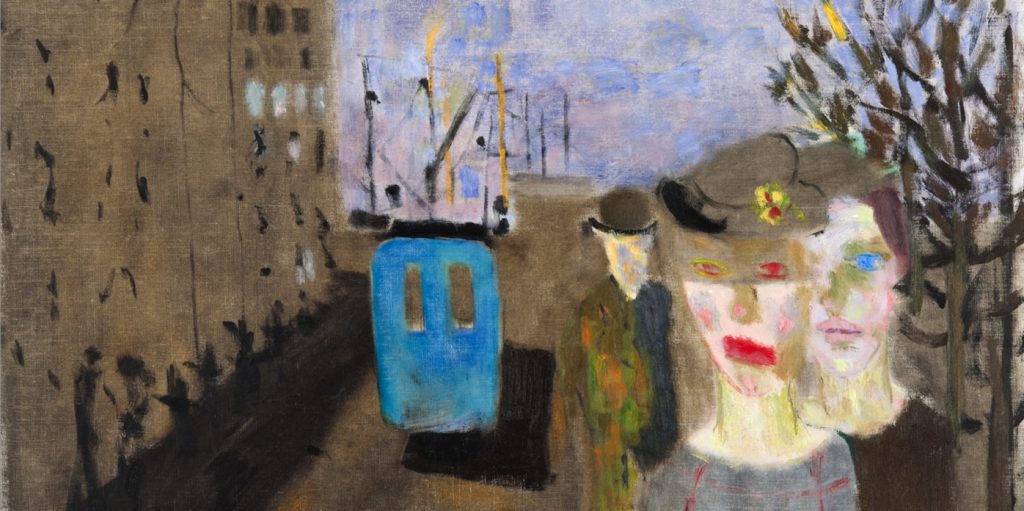
Through this research and exhibition project, the Gothenburg Museum of Art deepens, broadens, and adds nuance to the image of Gothenburg Colorism, while also scrutinizing the myths and historiography surrounding the movement by shedding light on its networks, contexts, and canon. Gothenburg Colorism is one of the most beloved art movements in the Gothenburg Museum of Art’s collection, and also the movement most closely associated nationally with Gothenburg’s art scene during the 20th century. The project, led by Dr. Kristoffer Arvidsson and funded by the Torsten Söderberg Foundation, has resulted in a research-based exhibition catalog and an anniversary exhibition at the Gothenburg Museum of Art that opened in April 2023.